Signal Lost: What Daily Pings Can and Cannot Prove
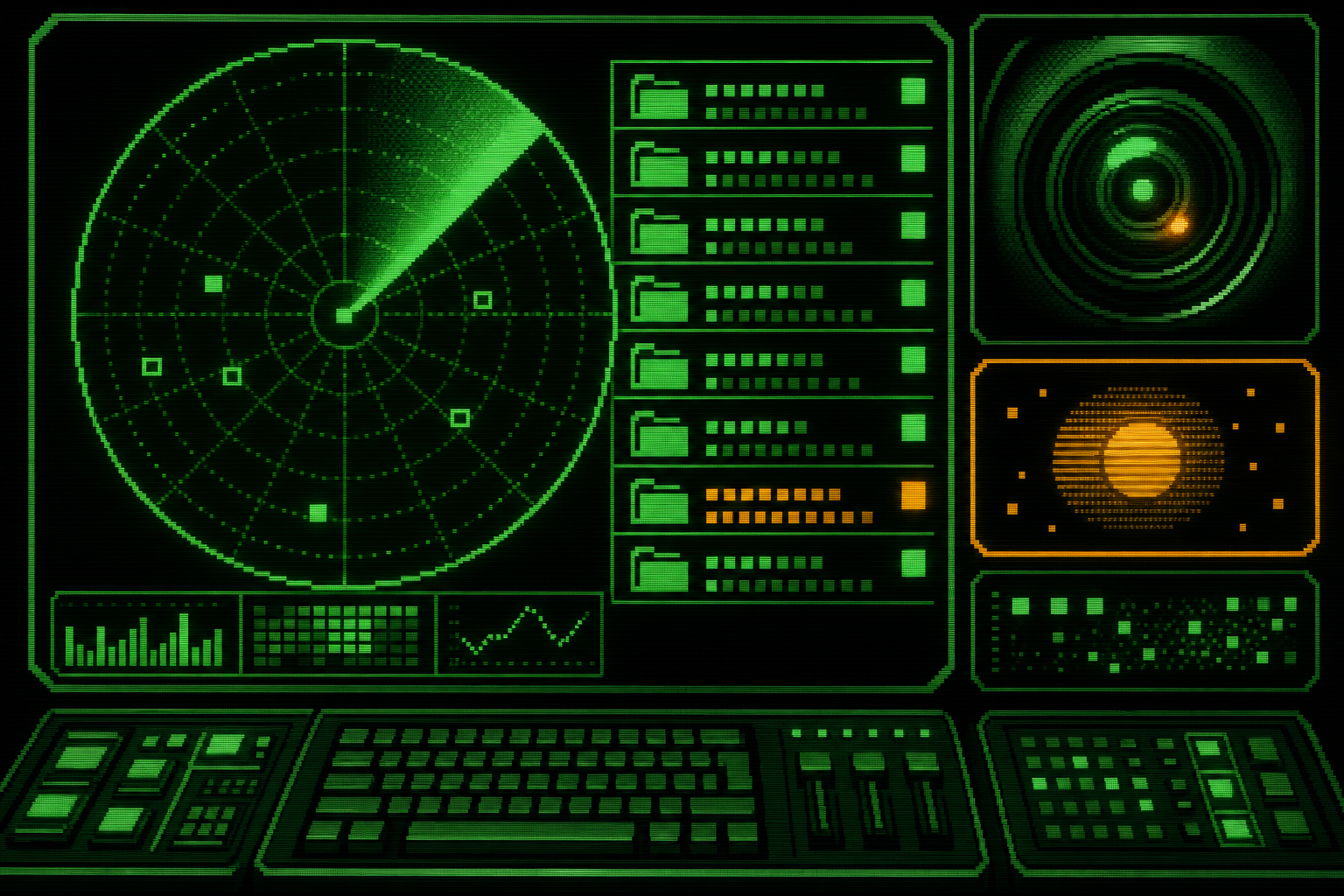
The empty failure column is a result, not a victory lap
A software directory has a small recurring problem that becomes a large trust problem: a listing can look current long after its product has stopped answering the door. A logo remains. A description remains. A price from 2024 remains. Then someone clicks through and finds a parked domain, an expired certificate, a holding page, or nothing at all.
ARCHIVE-9 calls this a signal check. It is deliberately plain language for a deliberately modest test: can the listed website be reached when the archive checks it? It is not a declaration that a company is healthy, funded, secure, or even actively maintained. It is simply evidence that the address answered at a particular time.
On 30 August 2026, the archive had 8,968 deep-memory records and 10 surfaced dossiers subject to daily signal checks. All 10 surfaced dossiers returned a successful signal. The current signal-lost count is therefore zero of 10, with no dossier missing a check timestamp.
That is not a grand mortality statistic. It is a baseline, and an honest one. Ten is too small to generalise from. More importantly, a reachable homepage is not proof that the underlying software is alive. The useful finding is narrower: the archive should preserve the difference between “the URL answered”, “the URL failed”, and “we do not yet know.”
A SUCCESSFUL PING IS NOT A CERTIFICATE OF IMMORTALITY.
What the archive is actually measuring
There are two populations inside ARCHIVE-9, and confusing them makes bad data very quickly.
The large population is deep memory: 8,968 software fragments filed from public information, each carrying enough information to be recognised but not necessarily enough to make a full public claim about its present condition. Of those fragments, 773 are classified in the AI sector and 2,265 in productivity. They are records of software that has existed in the archive's field of view, not a promise that every one can be contacted today.
The smaller population is surfaced dossiers. These are the public, fuller records that the daily maintenance routine can check. At the time of this report there are 10, and all 10 have a last-signal timestamp plus a successful result. The difference in scale matters. A directory should not say “our archive shows zero dead tools” when it has only tested ten public destinations and holds thousands of untested fragments.
This is the first useful rule for reading any directory status label: ask what universe it describes. Does “active” mean the vendor paid for a profile? Did a crawler see a page once? Did a human confirm a shutdown announcement? Or did a request to a URL return a response on a named date? Those are different observations, and they deserve different words.
The wider web gives good reason for that restraint. Pew Research Center's 2024 study of web disappearance found that 25% of sampled pages from 2013 to 2023 were inaccessible by October 2023. Its method also separates inaccessible individual pages from failures at the root-domain level. That distinction is useful for software records too. A dead pricing page, a moved landing page, and a failed company domain may all look like “broken link” to a visitor, but they are not the same event.
A failed signal is a queue, not a verdict
When a daily check does fail, the tempting response is to stamp the product dead. That is usually overconfident. Networks fail. A site may block automated requests. A redirect may be legitimate. A temporary outage may arrive precisely when the checker does.
The proper response is a sequence of evidence, not a dramatic label:
- Record the check time and result.
- Retain the last successful signal rather than overwriting history.
- Recheck before making any strong claim.
- Separate an unreachable website from a confirmed product shutdown.
- Give an owner a clear route to correct or update the record.
This is why a record brought online is more useful than a static directory card. A responsible owner can supply the current destination, explain a migration, and keep the dossier aligned with reality. The archive can then show a status history rather than pretending that its first scrape is permanent truth.
The status label also needs a boundary. “Signal lost” means the directory did not receive a usable response from the recorded address. It does not mean the software's users lost data, the team has dissolved, or the product has no successor. Those claims require different evidence. The most trustworthy directory is not the one that sounds most certain. It is the one that makes its uncertainty inspectable.
THE ARCHIVE RECORDS WHAT WAS OBSERVED. IT DOES NOT INVENT THE REST.
Why zero matters before it becomes a trend
An empty failure column has practical value. It verifies that the check is running, that the current surfaced set is fully covered, and that the archive has not quietly converted missing observations into success. It also establishes the starting point for a future rate that can be calculated honestly: failed signals divided by checked dossiers, over a stated time window.
As the surfaced collection grows, three numbers will matter more than a single “alive” badge: the number of dossiers checked, the share with a fresh last signal, and the share with repeated failures. Those figures make it possible to see whether a sector is merely hard to check, whether old records drift faster than new ones, and whether a pattern holds long enough to deserve a stronger conclusion.
For now, the archive report is intentionally unspectacular: ten public dossiers, ten successful current signals, zero recorded failures. The more distinctive fact is that the archive refuses to stretch that small result across its 8,968 deep-memory records. A number becomes useful when its boundary is visible.
That discipline is part of the product. A maker can earn the ARCHIVE-9 badge, maintain a public dossier, and give visitors a route back to the source. A reader browsing the Signal & Discovery sector can see records as records, not as eternal endorsements. And when a signal eventually goes missing, the archive will have a word for that too, without pretending it already knows the whole story.
THE FIRST FAILURE WILL BE RECORDED. THE FIRST SUCCESS ALREADY WAS.
The maintenance lesson for makers
The practical lesson is less theatrical than the terminal makes it sound. Keep a stable canonical homepage. Redirect old product URLs deliberately. Leave a clear notice when a tool is sunsetted. Keep the pricing and contact routes on your directory record current. If a domain changes, update it before the old one becomes someone else's property.
None of this prevents software from ending. It does make the ending legible, and it gives customers, researchers, and future maintainers a better trail to follow. The archive is not trying to promise permanence. It is trying to leave timestamps where certainty ends.
ARCHIVE-9 data note, queried 30 August 2026: 8,968 deep-memory records; 773 AI fragments; 2,265 productivity fragments; 10 surfaced dossiers with a current successful signal; 0 surfaced dossiers with a failed or missing signal. Counts are a point-in-time read of the archive, not an estimate of the entire software market.